

Guide · OEE
OEE: what it is, how to calculate it and how to track it live

By João Brighenti, founder of MesttiReviewed on
The three OEE factors
Availability
Run time ÷ planned time
Drops with stops, long setups, material shortages and micro-stops nobody writes down.
Performance
(Parts produced × ideal cycle) ÷ run time
Drops when the machine runs below its standard pace or has short stops.
Quality
Good parts ÷ parts produced
Drops with scrap, rework and parts discarded at the start of a batch.
Calculate a shift’s OEE
The values are an example: an 8-hour shift with a 30-minute break. Replace them with your machine’s numbers.
Mistakes that distort OEE
Writing stops down only at the end of the shift: the time and the reason disappear.
Using the sales target instead of the machine’s ideal cycle.
Ignoring micro-stops: performance drops with no explanation.
Counting parts on paper: delays and typing errors.
Looking only at the factory average: it hides the machine that loses the most.
Comparing machines whose planned time is calculated in different ways.
OEE at the end of the day or live?
In the end-of-day report
- Answers “what happened”.
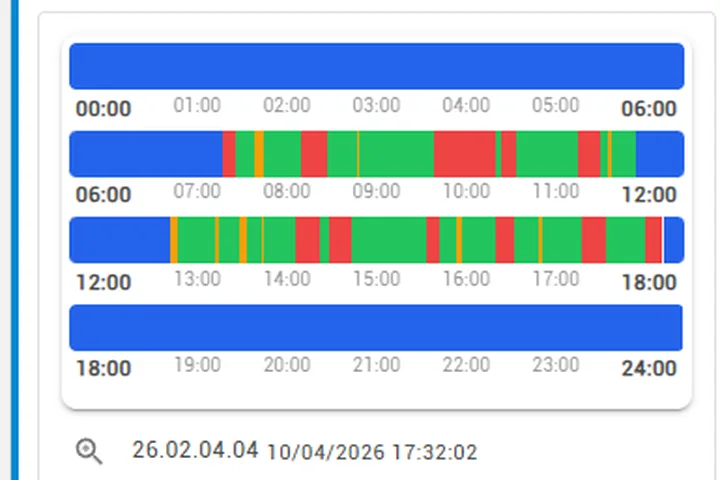
- The 09:42 stop shows up at closing time.
- The reason is written down later, if someone remembers.
- The loss has already become a delay.
Live, per machine
- Answers “what is happening”.
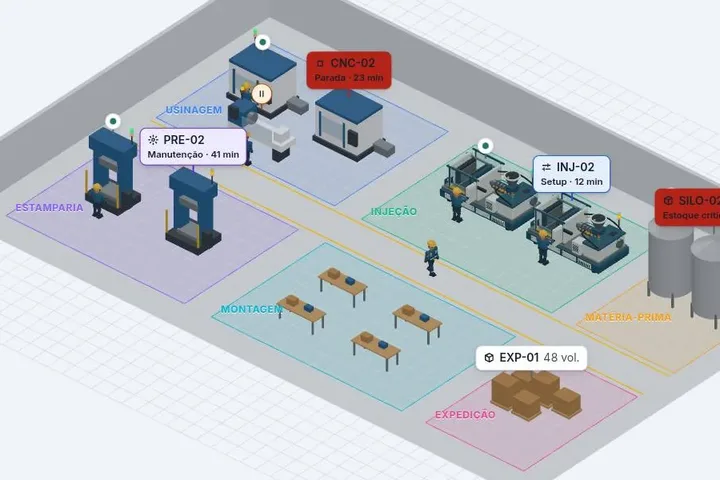
- The stop shows up right away, with its start time.
- Whoever is at the machine gives the reason on the tablet.
- There is still time to act during the shift.
How Mestti measures OEE
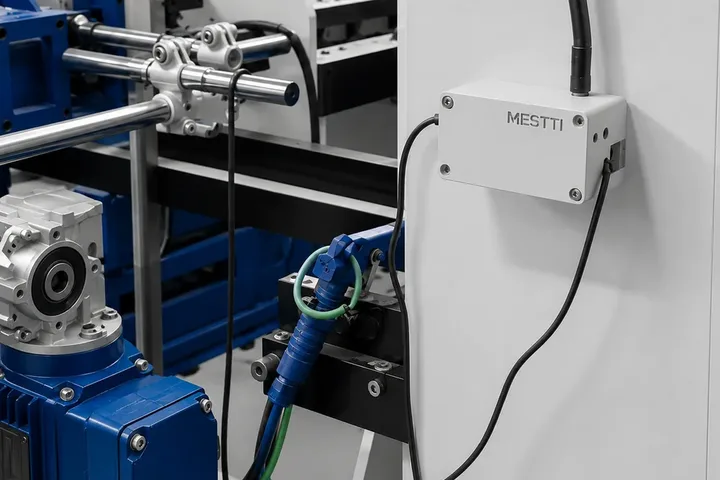
The sensor counts parts or cycles and marks when the machine stops.
Whoever is at the machine picks the stop reason on the tablet.
Quality records scrap and non-conformities, which feed the quality factor.
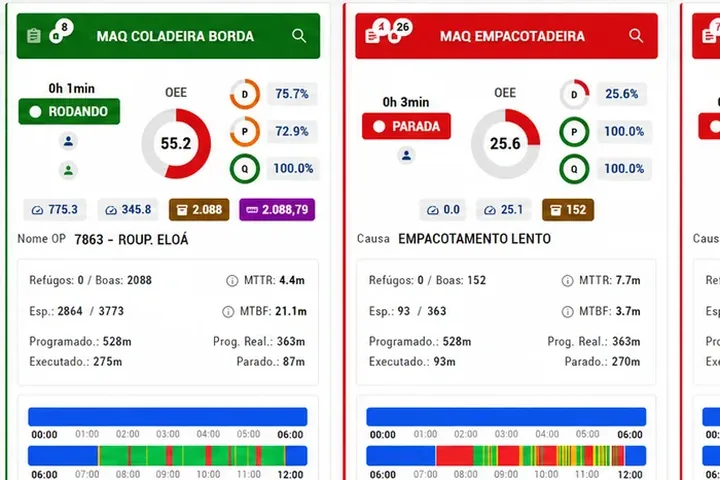
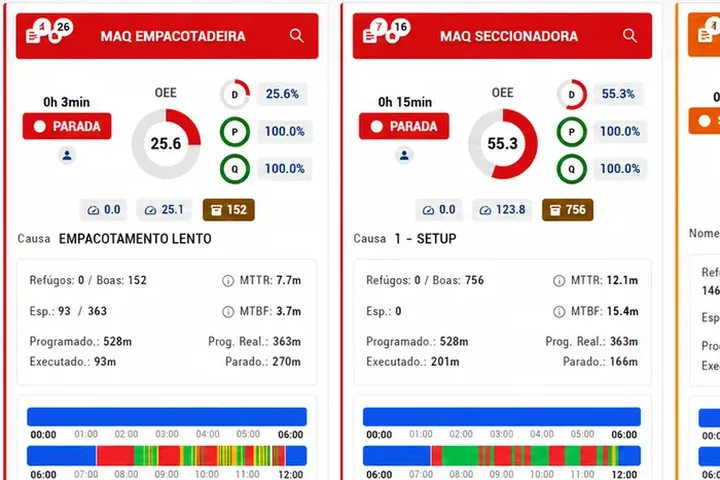
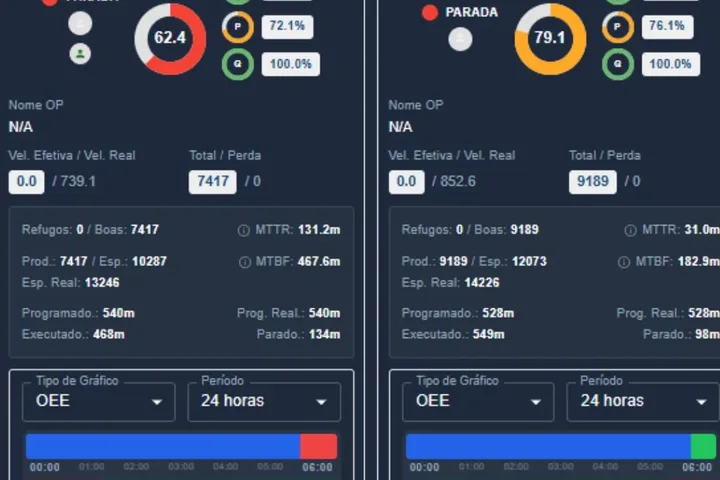
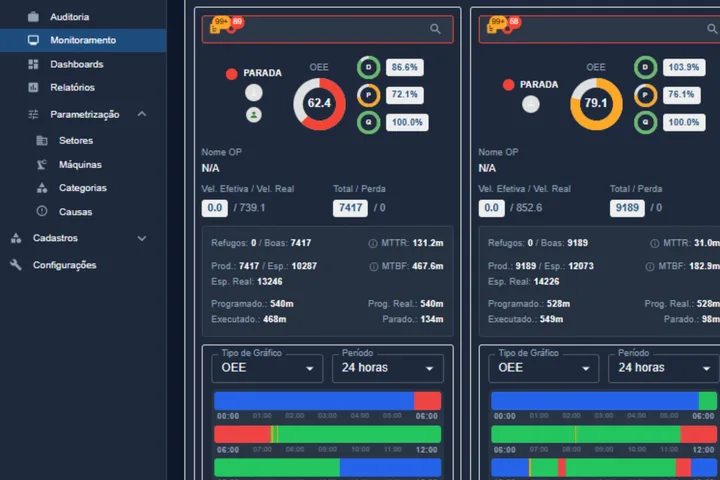
Each machine’s OEE shows up live, with availability, performance and quality split out.
Installed in 1 day, with no changes to the controls.
See production monitoring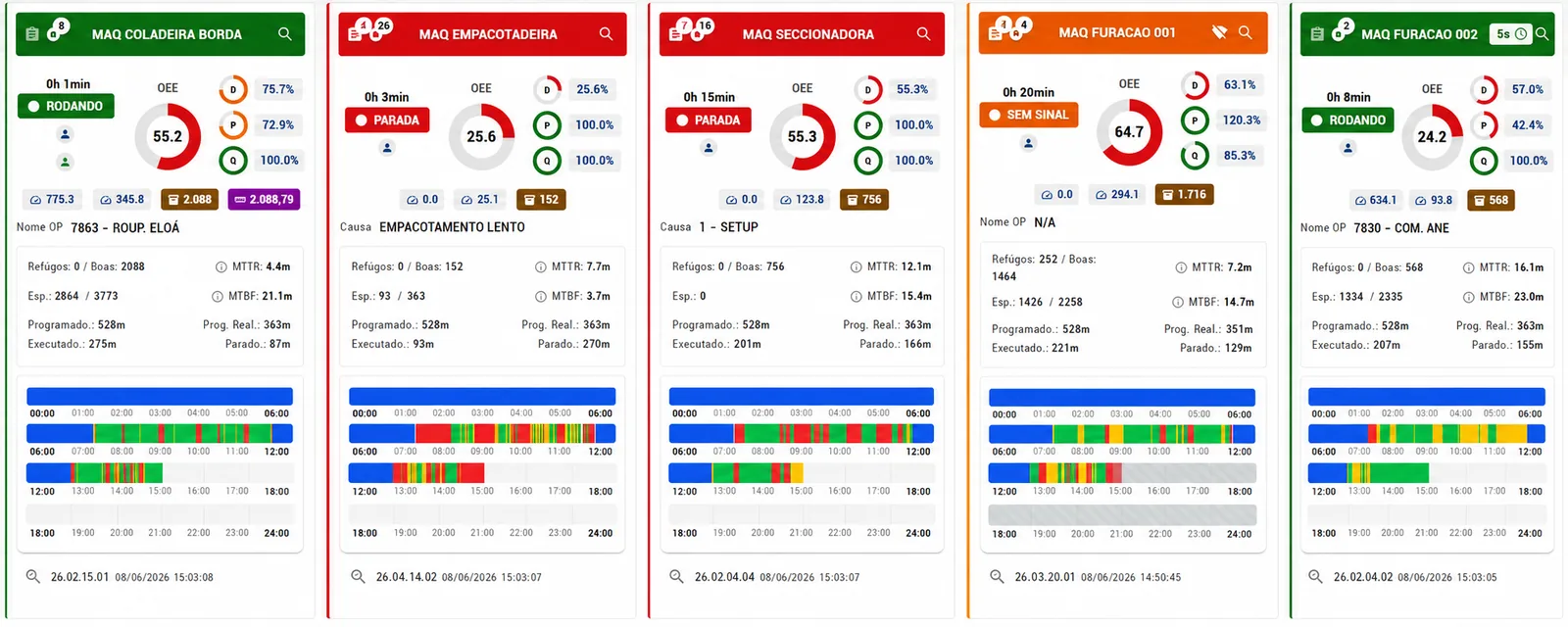
Questions about OEE
What is a good OEE?
There is no single number. 85% is often cited as a world-class reference, but OEE varies with the type of process. The most useful thing is to compare the same machine over time and find the factor where it loses the most.
What is the difference between OEE and productivity?
Productivity usually looks at how much came out. OEE compares that with what the machine could have made in the planned time and splits the loss into stopped time, pace and quality.
Do micro-stops count in OEE?
Yes. Short stops reduce run time or pace, depending on how the factory classifies them. Without automatic recording, they tend to disappear from manual reports.
Do I need a sensor to measure OEE?
You can calculate it from manual reports, but stop times and counts become less reliable. With a sensor, the count and stopped time are recorded automatically and the operator only gives the reason.
Can OEE be measured on old machines?
Yes, in most cases. The Mestti sensor reads count pulses or the machine’s electrical signal, with no PLC and no changes to the controls.
Is OEE for the whole factory or for each machine?
Both, but OEE per machine is what shows where to act. The factory average hides the machine that loses the most.
Articles on this topic (in Portuguese)
 Como controlar refugo e retrabalho por máquina
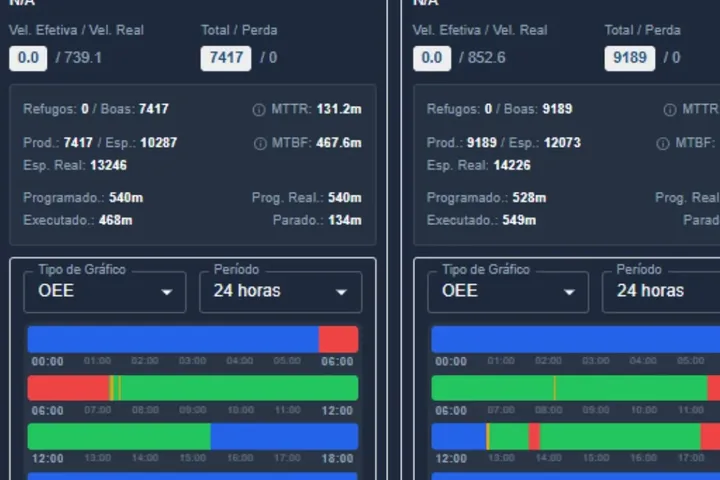 MTBF e MTTR: o que são, como calcular e para que servem
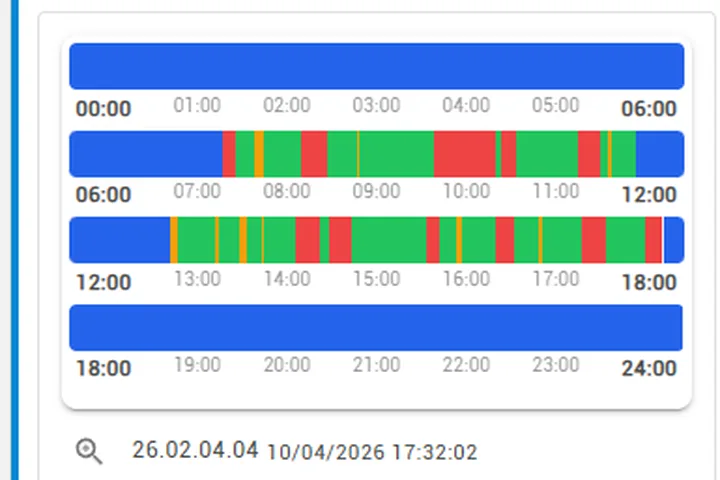 Microparadas: o que são, quanto custam e como encontrar
 Quanto custa uma hora de máquina parada
 Como reduzir o tempo de setup na prática
 Como calcular a capacidade produtiva de uma máquina
 Sensoriamento industrial: como sair do apontamento manual e ter dados em tempo real
 Como calcular o preço de venda de um produto na indústria usando RKW e custo do processo

Find out your machines’ real OEE in 1 week.
Leave your contact and we will schedule the demo at the best time for you.
If it does not fit, we remove the sensor and you pay nothing.
Prefer to talk now? WhatsApp · (43) 99109-5035